Poetics of Place
In conversation with TALC STUDIO
January 2026
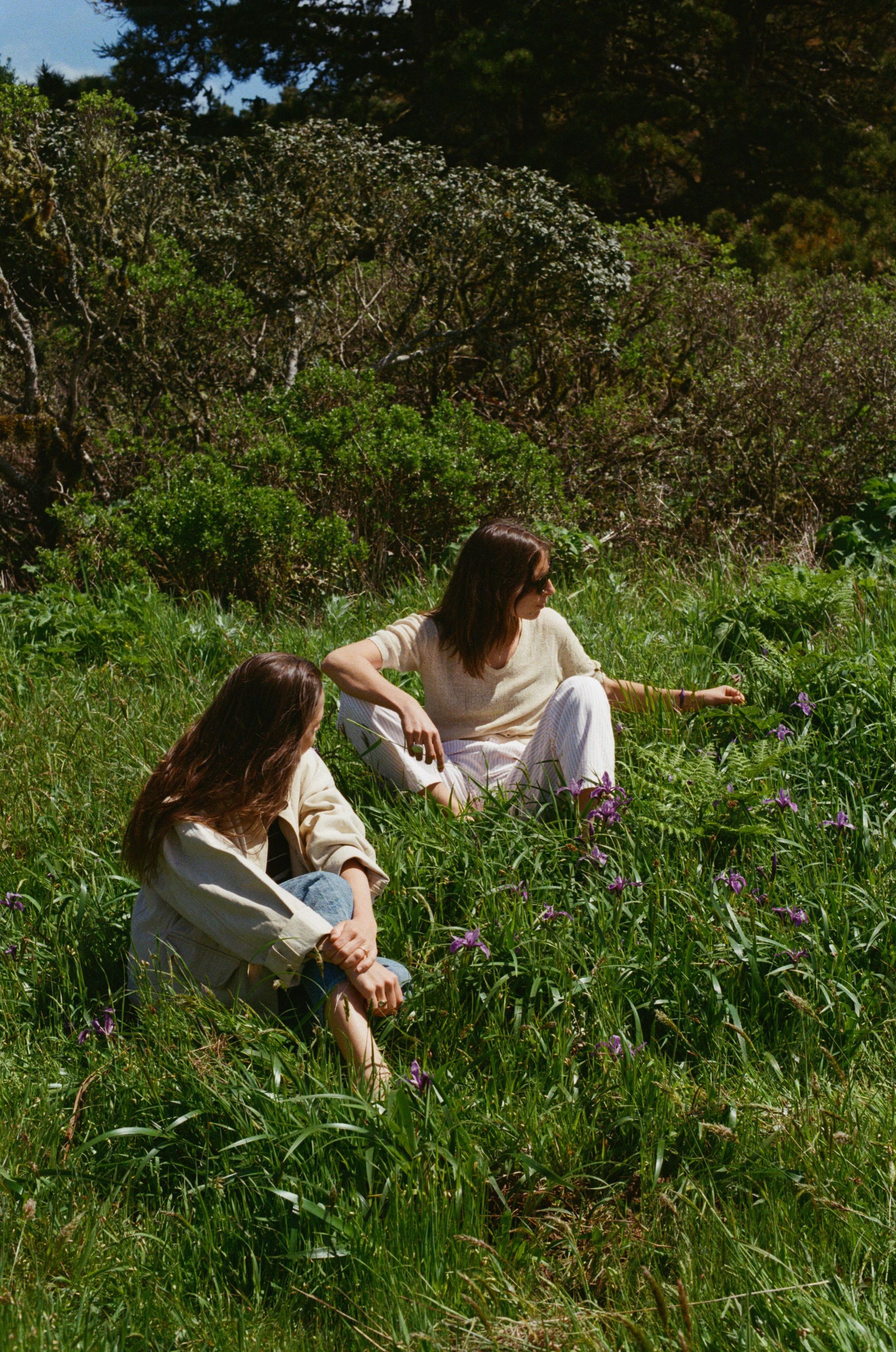
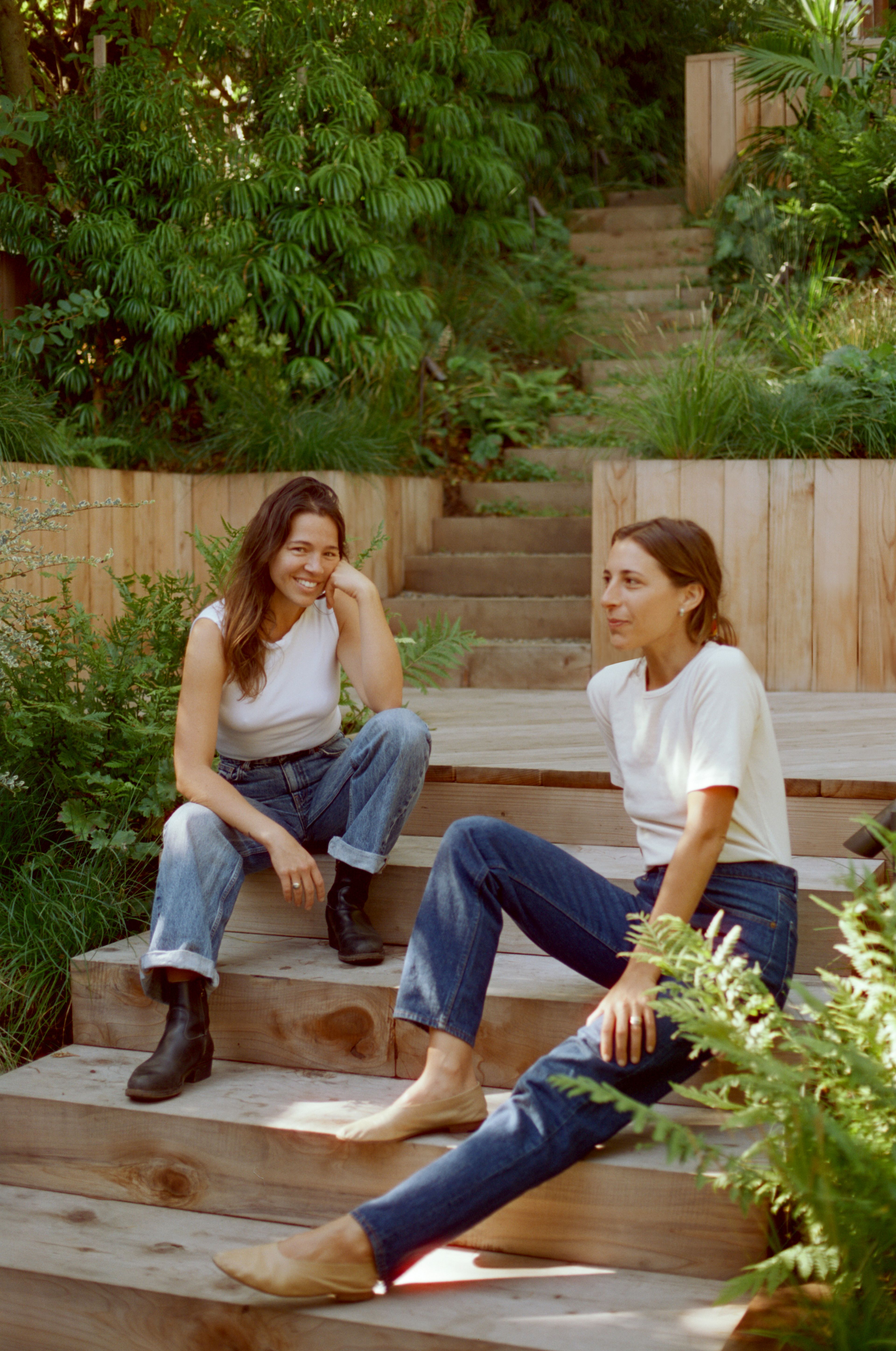
Anastasia and Taylor, the duo behind TALC STUDIO, have a distinctly cinematic way of approaching landscape. With a studio based in California, their work resists the expected visual rhythms of West Coast design—sun, succulents, and showy formality—in favor of something more elliptical, more tender. A garden, in their hands, becomes a vessel for memory, a stage for slow gestures, and a way of thinking about space that is as literary as it is lived-in.
In conversation with writer and curator Elizabeth Snowden, Anastasia and Taylor speak about designing through memory, looseness and restraint, and why the garden resists total control.
○
Garden design is at once a work of nature and of design—a collaboration that seems natural to humans. How do you think about that relationship?
A For me, good garden design is about setting the conditions where nature can truly thrive. Nature responds to our decisions—we sketch a plan, choose materials, shape the space—but over time the garden becomes a dynamic, evolving system. It's an ongoing collaboration. We tend to work with plants that feel true to the site, as if they've always belonged there. Then we allow for a bit more spontaneity in the hardscape and other elements—places where a level of refinement enters the natural environment.
T I see garden design as an space that invites experimentation and connection—through planting, through materials, through collaboration with clients. It's never really finished with the first planting. It remains responsive, shifting over time.
○
What are your first or most recent resonant memories of gardens or landscapes?
A One of my favorite early memories is visiting a family dacha on a trip to Russia. It was the first time I felt I could truly spread out into the landscape and feel at ease. I loved stepping outside the door into the garden—barefoot—surrounded by nature, picking flowers—as if the world had suddenly opened up. This contrasted significantly with my daily life growing up in an LA townhouse, without a garden space to call our own. Today, I carry the feeling of being a child in a garden—the coziness, freedom, and aliveness.
T Growing up in Baltimore, Maryland, my commute to school took me through rolling hills of horse pastures and old-fashioned colonial neighborhoods. The architecture was a mix of Arts and Crafts, Tudor, Colonial, brickwork. It all felt incredibly humble and sensitive. The presence of these architectures always put me at ease. The age of the buildings and their aging ways. The landscapes and gardens felt like they were always there. When designing, I always make space for these kinds of pauses, to how we can connect to emotion.
○
Memory seems central to a sense of place—your memories, a client's memories, the memory held in the landscape itself—and how we live. How does memory come into your work?
A At the beginning of the design process, we ask clients to complete a short creative writing exercise—one prompt is to describe a memorable place. I love reading the responses. Each one begins to form a picture, but more importantly, a feeling. That feeling becomes a guide—something we return to as decisions are made. It might surface in the structure of the space, in how you move through it, or in quieter details like planting or material shifts. The goal isn't to replicate a memory, but to translate its atmosphere into something lived and present.
T Understanding a client's background and how they want to feel in their environment is essential. It becomes a balance between our perspective, the functionality, and the client's lived experience - what memories hold true for them. Everyone has reference points; we're all shaped by something that carries into what we find aspirational.
○
You work in California, where there’s a strong sense of place—the landscape, the architecture, a recognizable design language. How do you navigate aesthetic trends and expectations? Do clients tend to arrive with a point of view beyond what’s circulating, or are they often looking to recreate something familiar
T With the immense variety of plant species we can grow here, there are fewer limitations. Which is, I believe, what's led to the emergence of a new California aesthetic over the past two decades: dotting gardens with plants from all over the world—native and non-native. A rare cactus next to a rose bush. That feels Californian to me. In California, you can have sagebrush and you can also have ferns. I admire landscape designers who work within constraints we don't have here. In the face of so much variety, I tend towards restraint—and Anastasia is really good at bringing in spontaneity and a certain looseness.
A We move between those two impulses—leaning into this aesthetic, but then also wanting to button things up and see how far we can go in paring back. A garden needs a clear point of view to give it structure; otherwise it lacks intention. At the same time, experimentation is essential. Each site—its microclimate, soil, and light–is different, so even with a shared palette, we keep combinations specific and responsive to the place.
○
How do landscapes and gardens differ?
A Landscape operates at a larger scale—an expanse. Gardens are more intimate, shaped by people, while landscapes allow for a broader kind of abstraction. In a garden, every crevice holds a purpose. As a landscape designer, you're balancing your own sense of beauty, function, and horticultural soundness with what happens when you're no longer there—when people live in the space and experience it in their own way. It's a balance between our point of view and the ways others come to see and inhabit a place.
○
Why do gardens matter? It's hard to imagine a house without one—architecture's other half—where the built meets the unbuilt landscape. Many people, especially in cities where private gardens aren't possible, still aspire to have one. Why is that?
A Gardens sustain life—ecologically, physically, and emotionally. They remind us of our connection to the natural world. A garden can be a place for refuge and inspiration; for quiet thought and peaceful activity. Gardens can be a sanctuary and a place for restoration. With each project, we aim to create a pocket of hope—a place to witness growth and experience rhythm. A garden is magical because they resist total control. The elements are inherently unpredictable, and there's a kind of surrender in that.
TALC STUDIO is a practice between architecture, landscape, and place, shaping landscapes as immersive, living systems led by observation and guided by site.
Services
- Site Consultation & Analysis
- Schematic Design
- Visual Studies & Renderings
- Ecological Strategy
- Plant Selection & Specification
- Construction Documentation
- Procurement & Installation Oversight
- Phasing & Implementation Strategy
- Lighting & Site Furnishing
- Artist & Specialist Collaboration
- Custom Objects & Sourcing
- Post-Installation Stewardship